
March 3, 2026 marks the 163rd anniversary of Arthur Machen’s birth, and the first anniversary of the publication of At A Man’s Table: Gastronomical Adventures with Arthur Machen. The limited hardcover is out-of-print. However, copies of the limited softcover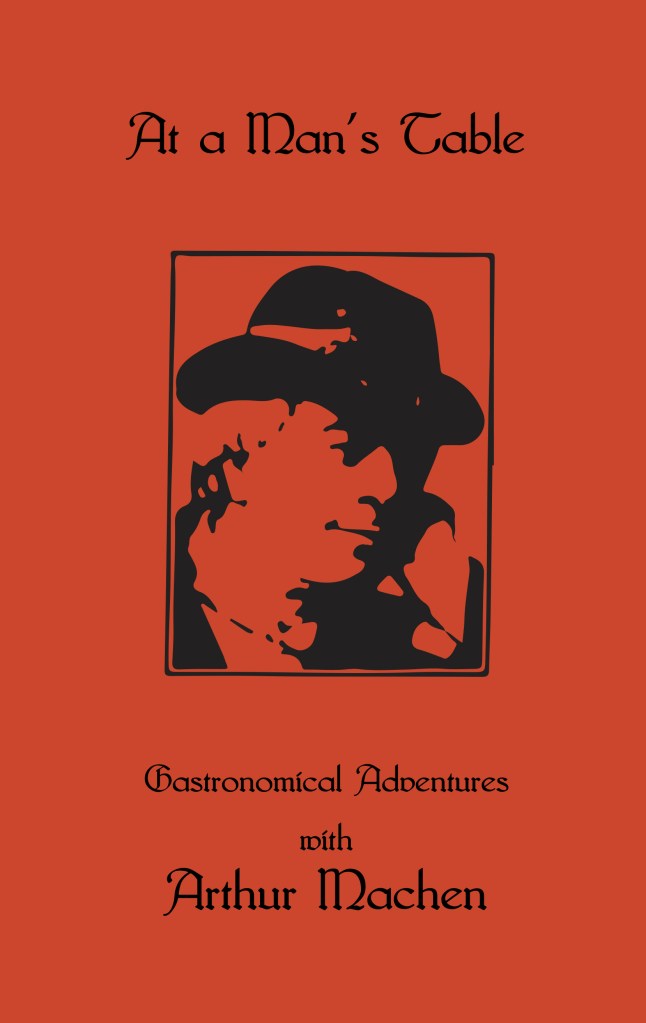 still remain available. For the month of March, the book can be purchased at 35% off the retail price.
At a Man’s Table was $17 USD + shipping. Now $11 USD + shipping.
Other International Customers: Please contact us for shipping rates to your country: info@darklybrightpress.com.
 For more savings, purchase the softcover edition of The Terror: Critical Edition, and receive the softcover edition of At A Man’s Table for FREE.
The Terror + At A Man’s Table was $37 + shipping. Now both books are $25 USD + shipping.
Other International Customers: Please contact us for shipping rates to your country: info@darklybrightpress.com.
As an appetizer, enjoy the following excerpt from the collection:
Cawl and Marigolds
Some Queer Breakfast Dishes : Mutton Soup and Goose
Many years ago—thirty or forty, perhaps—there was a terrible murder in a small New England town. There was a household of an old man—as some said, an old miser—and his second wife, two daughters of a former marriage, and the “hired girl.”
One black morning the old man and his wife were found horribly butchered. One of the daughters was tried for the murder and acquitted. The criminal was never discovered.
But among all the circumstances of horror that the tale afforded, nothing struck me as more dreadful than the hired girl’s evidence as to the breakfast which she had prepared for the family. She had warmed up some mutton soup.
Is this as terrible as the knocking on the gate in “Macbeth”? If it had been mutton broth, it might have passed, though that were somewhat grey and dreary for the first hours of the morning: but mutton soup; slab and thick!
Eye of newt and toe of frog would give a relish in comparison with such a dish; a compendium of all the mean and evil passions which—had long festered and gangrened in that dreadful house.
But houses unstained by murder have chosen strange things for breakfast. Up to fifty or sixty years ago there was little tale of tea or coffee for breakfast in the small farmhouses of South Wales.
The standing breakfast dish was there, also a kind of broth. It was called cawl, which is pronounced cowl. It is made by boiling together a sizable piece of fat bacon and couple of cabbages.
Naturally, the surface of this dish sparkles with fat, and to make it still brighter it was served with marigold blossoms when marigolds were in flower. Of old, it may be, the marigold flowers were supposed to have some medicinal virtue—the blue borage blossoms that still bedeck claret cups once “gave courage.”
So fennel once flavoured a sauce eaten with salmon, then became a garnish or ornament, and now has disappeared altogether. And the marigold flowers in the early morning cawl had passed into the decorative stage. A farmer’s wife told me long ago that she thought they were only put into the broth “to look pretty.”
The Schoolman of old observed with deep wisdom that all things, if you do not examine them profoundly, vanish into mystery. So it is with breakfast.
Was breakfast originally a big and solid meal, or was it a mere snack? Oddly enough, I believe that arguments might be advanced to show that it was both at once.
In the medieval castle, for example, I doubt whether breakfast was a ceremonial, sit-down-to-table meal. In the words of Mrs. Joe Gargery, there was no formal cramming and busting.
I think that when the early Mass was done, the faithful betook them to the buttery hatch and were served out huge chunks of bread and cheese and pasty, and great stoups of wine and ale, and ate and drank standing, or sitting, or wherever and however they could. There was cramming and busting, therefore; but it was not formal.
So, later in history, Pepys tells how he breakfasted on a goose, substantially but unceremoniously. And at about the same time, Cotton, the angler, apologises for the lightness of his breakfast, which was merely a tankard of ale and a pipe of tobacco.
And ale continued to be a breakfast dish till long afterwards. Eighty years ago tankards of ale were served as a matter of course, together with tea and coffee, at a don’s breakfast table at Oxford.
Breakfast, then, in early times was always a snack, food taken informally; what the Americans call a “lunch.” But it might be either light or heavy.
In Hogarth’s picture, the dissolute pair in the “Rake’s Progress” are being served with chocolate in tiny cups after their night’s dissipation; and Dr. Johnson, rising, not with the sun, as he confessed, broke his fast on a cup of tea and a roll, taking the crumb himself and giving, or—as some said—throwing the crust to Dr. Levett.
Rogers, the banker-poet, who might have known Johnson if he and his friend had not lacked the courage to knock at his door, carried on the tradition of the frugal breakfast into the next century, and when he entertained people of the highest distinction at his breakfast table, gave them tea, toast, bread and butter, and, if they would, boiled eggs.
But when Tom Brown went to Rugby the coaching breakfast was substantial; there were grilled kidneys, cold beef, and muffins, and Major Bagstock offered Mr. Dombey not only devilled kidneys, but savoury pie, before the pair set out on their journey to Leamington.
The origins of that rasher of bacon, which is not almost the tyrant of the breakfast table, are to me obscure. No doubt the countryman had cut a chunk of cold bacon and a hunk of bread, and had breakfasted on the two under a hedge or in a barn from time immemorial; but I do not think the genteel rasher can be traced earlier than the nineteenth century.
Here is a savoury and simple breakfast dish. Take cold boiled potatoes, break them up into bits the size of a walnut, fry them, with two or three pieces of rashers cut into small pieces, till they vary in hue from golden to brown. Then put them on a dish into the oven, or better still, in front of the fire, and serve very hot.
 darklybrightpress.com