
The Weekly Machen
Arthur Machen lived and wrote near the end of an era of discovery. True, the New World and Australia had been discovered by Europeans centuries before, but there were still corners of the globe that remained in the deepest mist. This is perhaps difficult for us to imagine today in our techno-obsessed world of satellite imaging and Google Maps, but the expeditions to the North and South Poles were great voyages into the unknown and were completely hostile to the brave men who undertook the danger. In these voyagers, Machen detected a hieroglyph of man’s enduring love for mystery, even at the cost of his life.
The following article is significant in two respects. Firstly, it is an extremely rare example of Arthur Machen writing expressly for children. (Next week, I will post another such example.) Secondly, it presents a bibliographical mystery. Goldstone and Sweetser listed an article entitled “Captain Scott’s Memorial Service” on Page 1 of the February 14, 1913 edition of the Evening News, which I unfortunately do not possess. However, they do not list the following item found on Page 4. Furthermore, the editorial introduction states that a pamphlet of the story would made available to those who request it. So far, I haven’t found mention of this pamphlet in any other secondary source, but I dearly hope an example of it survives somewhere. Appended is an unsigned follow-up article of February 17 which further testifies to its existence.
The Immortal Story of Captain Scott’s Expedition:
How Five Brave Englishmen Died
by
Arthur Machen
February 14, 1913
A million-and-a-half school children in London and the provinces took part, in spirit, in the memorial service to the dead Antarctic heroes in the great metropolitan cathedral to-day.
At the close of the morning session seven thousand teachers, in as many schools, read to the assembled scholars the simple story of the great tragedy, which has been specially written by Mr. Arthur Machen.
There is not a child who heard the teacher read this moving story but will be inspired in some degree with the thought that true nobility of character alone makes for greatness.
Below is the text of the story:—
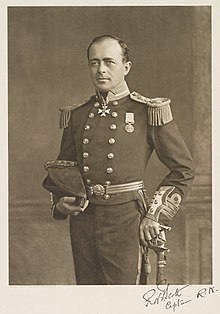 “Children: You are going to hear the true story of five of the bravest and best men who have ever lived on the earth since the world began.
“You are English boys and girls, and you must often have heard England spoken of as the greatest country in the world, or perhaps you have been told that the British Empire (which means India, Canada, Australia, New Zealand, South Africa and many other smaller counties, as well as England, Scotland, and Ireland) is the greatest Empire that the world has ever seen. Perhaps you have thought that great just means large or big and nothing else. It may mean that, but it means a great deal more than that. The Jews were a great people and so where the Greeks in the old days, and both Jews and Greeks lived in countries which were quite small.
“So when we say that England is great we are not thinking of the size of the country or of the number of people who live in it. We are thinking of much more important things, and if you listen to the story that is to be read to you, you will find out what greatness really does mean.
In The Regions Of Ice And Snow
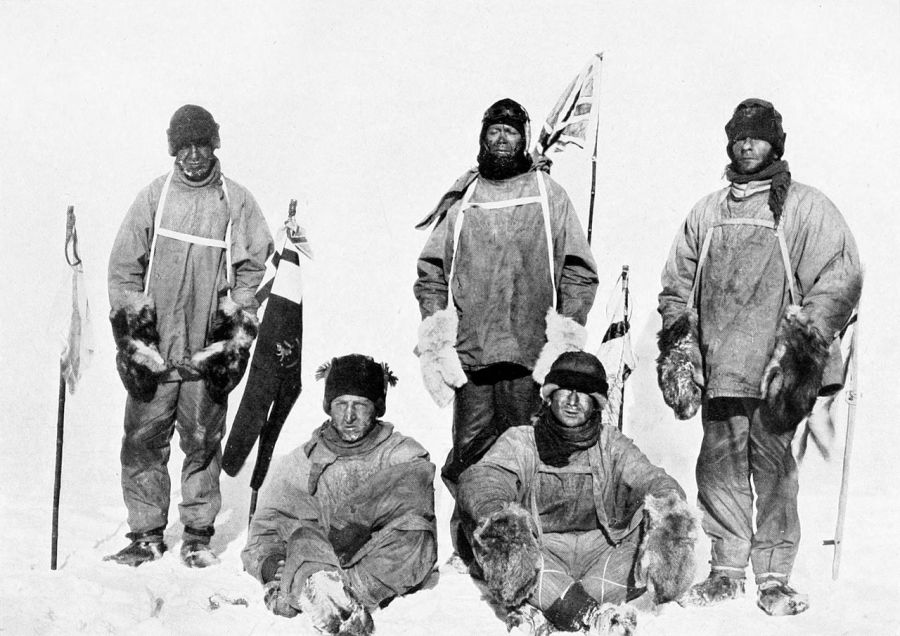
“You are to hear about five great men. Their names are: Captain Scott, who was their leader, Captain Oates, Lieutenant Bowers, Dr. Wilson, and Petty-Officer Evans. These men are all dead, and they died after dreadful pain, in a dreadful place, called the Antarctic Region. You can find it on the maps and on the globes; it is the very bottom of the world. There, where the South Pole is, it is always cold, it is colder than anything that you have ever felt. There is no proper land and no water. The sea itself is frozen into waves of ice: the mountains are ice mountains; it is dark night there for many months in the year, and terrible snowstorms and bitter winds make it very difficult for anyone to keep alive for any length of time. At the South Pole, as at the North Pole, there are no living creatures, no grass, no trees, no flowers. There is nothing but ice and snow, and that dreadful cold that freezes off men’s hands and feet, as if they had been burnt off in a flaming fire.
“Nearly three years ago Captain Scott went on a voyage to this dreadful country. He and the officers under him and the sailors went in a ship called the Terra Nova, which means ‘the new land.’ The captain knew quite well what sort of a place he was going to, as he had been there before. So he quite understood the danger of the journey; he knew all about the awful cold; he knew how often men got ill and died in these places because of what they have to eat there; and how the frost eats into their faces and their hands and feet. Captain Scott knew of all these dangers and hardships that would have to be borne, and his officers and men knew of them too. But they went aboard the Terra Nova and sailed away to the South Pole. They sailed from the docks in London, going down the river on a June morning: down the River Thames, out into the English Channel, by Margate and Ramsgate and Dover. Then the Terra Nova sailed through the English Channel between France and England till it came out into the great Atlantic Ocean which divides Europe from America. Then the ship began to sail to the south.
The Spirit Of Adventure
“It went by France and Spain and Madeira right out into the Atlantic, and went southwards by West Africa and the Cape of Good Hope. Still southwards the ship sailed by the West of Australia, by South Australia, till they got to New Zealand. All those places are marked on the map, so you can see what a long, long way Captain Scott and his men sailed on their journey to the terrible Antarctic Region. And still, though they had come all this way—fifteen-thousand miles or even more—their real journey had not begun.
“For they wanted to find the South Pole; that is, the very bottom of the world, the most southern place on it; and that South Pole is far south of New Zealand in the land of eternal ice and snow and cold.
“And they took the ship down to that terrible country as far as they could, till the cold began to freeze the water into hard ice, and then they made the ship fast.
“Some people wonder why Captain Scott and his men wanted to find the South Pole at all. There is nothing wonderful or beautiful to see there; only the ice and snow, which is all over that land. There is no gold to be found there, you cannot get money by going over there: all that a man can hope to get in that place is hunger and cold and sickness, and very likely death itself. Why, then, did Captain Scott want to go there at all?
“He went, first of all, because every man who is any good is curious about the world; he wants to know all that there is to be known about it. And it has been thought that by going to the North and South Poles we should find out all sorts of things about the heat and the cold and why the winds blow, and whether the ice is ever likely to move and come over the rest of the world as it once did, hundreds and thousands of years ago. To find out these things and other things of the same kind was one of the reasons why Captain Scott went to find the Pole; but there is another reason which is called the love of adventure, which is often a love of danger. It is this love of adventure and of doing dangerous things which has sent Englishmen all over the world, into the very hot places as well as the very cold places, wherever there was something new to be seen, or something strange to be seen, or something difficult and dangerous to be done. And people who have not got something of this spirit in them are very little good either to themselves or to anybody else.
Hereabouts Died A Most Gallant Gentleman
“So Captain Scott sailed down till he came to the frozen sea, and then when the right time came he and four of his companions left the ship and started in sledges for the South Pole. They found it, and they marked the place, and they found out all that there was to be found out, and then they turned back, hoping to go on the ship again and so sail safely to England.
“Then their troubles began. It was much colder than they thought it would have been; they had terrible storms, and the ice was the roughest that had ever been seen. Then one of them, Petty-Officer Evans, fell ill, and tumbled on the rough ice on the back of this head and died soon afterwards. He was the strongest of them all, and his death was a great loss to them.
“Then Captain Oates, who was an officer in the Army, became ill. His hands and feet were frost-bitten, and he was in dreadful pain. He could hardly walk at all, and yet dragged his feet along over the snow and ice. He never grumbled: he was always quite cheerful and hopeful, even when his friends saw that he was so ill that he could never see England any more.
“But at last Captain Oates knew that he must die, and he laid down to sleep one night in the tent, hoping that he might never wake again in this world. But the next morning he was still alive, and he went to the door of the tent and looked out. An awful storm of wind and snow was raging; and then, turning to his three friends, he said he was going out for awhile, and might be away for some time. He knew that he was going to die, and they knew it, too; but he went out to die in the storm because he did not wish Captain Scott and the two others to have the pain of seeing his death.
“And now listen particularly to what is read next, because it was all written by Captain Scott himself as he lay dying in the tent of cold and starvation. He could not go any further, because of the storm, and there was no more food and no more fuel, so he knew that he and his two friends had to die. He passed the time by writing the story of their trying to get back from the South Pole.
Here follow the imperishable words written by Captain Scott during the last hours of that heroic band, his last thought was for others.
“So these brave men died; and now you know what we mean when we say that they were great. They feared no danger, they never complained, they did their very best, each one willing to give up his life for the others, and when they knew that there was no hope for them they laid down their lives bravely and calmly like true Christian gentlemen.”
The Immortal Tale:
Boy Scouts to Hear the Epic of Captain Scott
The interest in the “Immortal Story of Captain Scott’s Expedition,” specially written for The Evening News by Mr. Arthur Machen, and read in the schools of London and of many parts of the country, is indicated by the enormous number of fresh applications for copies of the pamphlet.
Many of them are from the conductors of private schools; scoutmasters are cordially adopting our suggestion that the pamphlet should be read to Boy Scouts at the next parade; and we are also receiving not a few requests from parents who wish their children, not yet of school age, to hear the story.
A special parade of the 1st Islington Troop of Boy Scouts has been called for this evening for the reading of the pamphlet; and a special salute to the memory of Captain Scott and his companions will be given.
The pamphlet is to be read in South Africa. Mrs. F. Sydney Parry, of Elm Park-gardens, S.W., asks for a copy to send to a little niece, the daughter of a member of the Cape Parliament, to be read in her school and passed on to others.
Mrs. Parry desires a second copy, to be read in turn to three evening clubs for girls from fourteen to fifteen years of age and three junior classes of girls from ten to thirteen.
For Fatherless Ones
“I very much desire a copy to read to a small boy,” writes one correspondent, while the secretary to the Leeds Education Committee asks for a further supply for use in the outlying schools of the City.
A request for a pamphlet comes from the Imperial Yeomanry School, Alperton, Wembley. “I am anxious,” writes the headmistress, “that the girls should never forget what Captain Scott and his brave companions have done. The fathers of all these girls lost their lives either during or after the South African War, so they all have someone who died for his country.”
The secretary and librarian of the Atheænum Club, Pall Mall, writes:—“I should be obliged if you would kindly let me have two or three copies, as I should like to preserve them in our great collection of pamphlets.” *
To Scout Masters
The Boy Scouts’ Association endorses the suggestion that the pamphlet should be read at the next parade of every troop, and has accepted our offer of a free supply of the pamphlet.
Scoutmasters should apply direct to the Boy Scouts’ Association, 116-118, Victoria-street, S.W., enclosing postage of the copies required.
* Editorial Note: At the time of posting, inquiries to the Atheænum Club have remained unanswered. Other library sources have been explored without result. The hunt continues.
Previous: The Piper
Next: Remembrance Day Address
 darklybrightpress.com
Thank you for this! Posted, as I happened to learn (from Wikipedia’s list of notable events of the day), on the birthdays of both Robert Baden-Powell and his wife, Olave, on 22 February – variously celebrated thereafter as “B.-P. Day”, “Founders’ Day”, and, from 1926, for the Girl Scouts, “Thinking Day”.
I am a bit confused about the sequel to Machen writing “Here follow the imperishable words written by Captain Scott during the last hours of that heroic band, his last thought was for others.”
Scott’s Last Expedition: Vol. I. Being the Journals of Captain R. F. Scott, R. N., C. V. O. Arranged by Leonard Huxley (London: Smith, Elder & Co., 1913) – as uploaded in the Internet Archive by the Biodiversity Heritage Library on August 17, 2015 – has his last ordinary diary entry (pp. 594-95, with a plate between of the last three sentences in his handwriting), seven Farewell Letters (pp. 597-604), and his Message to the Public (pp. 605-07, with three plates between: one leaf recto and verso and a second recto with, I think, the complete text in Scott’s handwriting). Do we know (from ) what Machen quoted?
LikeLike