
The Weekly Machen
Evelyn Underhill remains one of the more interesting figures to emerge from the hazy and gaslit milieu of early twentieth-century British spirituality. Though most famous for a massive tome, the appropriately titled Mysticism, I personally find that a later book, Worship, is more accessible and satisfying. An acquaintance of Arthur Machen, Underhill dedicated her third and final novel to Machen and his wife, Purefoy.
What is Mysticism?
Bringing Humanity to Exquisite Perfection
by
Arthur Machen
March 4, 1913
Miss Evelyn Underhill is the author of three remarkable novels—or, rather, romances—“The Grey World,” “The Lost Word,” and “The Column of Dust.”
Her “Mysticism” is a history and a commentary. There are many books which touch on this subject and illustrate it from various points of view; “Mysticism” remains the only complete summary and analysis of the supreme chapter in the great history of man.
A few months ago Miss Underhill published “Immanence: A Book of Verses.” This month Messrs. Dent will issue her latest book, “The Mystic Way: A Psychological Study in Christian Origins.”
_____
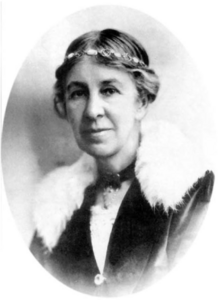 Miss Underhill had discussed with me the purpose and the contents of her forthcoming book, “The Mystic Way.” We had agreed on most points and had differed on one or two; and I said at last:
“What shall we say that mysticism is? Shall we adopt Cardinal Wiseman’s definition and call it ‘the science of love’?”
“I don’t like the word science as applied to mysticism,” replied Miss Underhill. “I should prefer to say that it is a method of life, directed to a certain end: namely to union with the eternal consciousness that we call God. Mysticism represents the highest form that the human consciousness can assume: it aims at bringing humanity to its most exquisite perfection, and though the German theologian Harnack would treat the imputation of mysticism as a false accusation, I would readily adopt his definition of Christianity as a definition of mysticism: ‘living the eternal life in the midst of time.’”
Mystic Progress
“That we may so pass through the things temporal that we lose not the things eternal.” The sentence came into my mind as an ancient variant of Harnack’s phrase. The blundering reformers inserted the word “finally”—“that we finally lose not the things eternal”—destroying the meaning utterly. But the true sense speaks of a man who tastes in mortal things immortal savours; who sees more in the dawn than patches of red and yellow cloud, to whom the sweetness of a May morning is a high solemnity, who is a native of Turner’s enchanted lauds, who, receiving bread and wine at a common board, is made partaker of all the stars and all the heavens.
Well, we tried to the best of our ability to define the indefinable—let me say, by the way, that every reality is equally indefinable—now it may be as well to say what the new book, “The Mystic Way,” is about, what it tries to prove.
In Miss Underhill’s own words, the main thesis of the book is this: “to be a whole Christian is to be a mystic.”
“The Ritschlian School,” Miss Underhill said, “declares that mysticism is foreign to Christianity; it traces the mystic doctrine to the pseudo-Dionysius. I show that the whole discipline of the mystic way, the progression from Conversion, through the Purgative way, the Illuminative way, and the Dark Night of the soul to the gate of union with Deity is distinctly to be traced in St. Matthew, St. Mark, St. Luke, in the documents of the Early Church, and in the Liturgies.
“I show that the New Testament is a fountain of the purest mystic doctrine; that no other religion can compare with Christianity in its presentation of the interior eternal life.”
The Latin Mass
Then we came to a very delicate and a very difficult point.
“I find,” said the author of “The Mystic Way,” “that I shall have to admit the non-historical character of a great deal of St. John’s Gospel; many of the discourses of the Christ recorded in it seem to me quite removed in spirit from the discourses recorded by the other three Evangelists.”
We went into this point at some length; and here I perceived the relevance of the author’s reference to the psychology of mysticism in her sub-title. Her contention, very briefly and summarily expressed, is that St. John uses a certain mystic technique of expression, common to all the avowed mystics of all ages, but lacking in the synoptic Gospels.
Well, there is here an apparent heterodoxy; but I believe that it is more apparent than real.
“The fourth Gospel,” Miss Underhill said, “is a spiritual document of the highest order, and the discourses in it are the direct fruits of the writer’s intercourse with the Spirit of Christ: he heard them as ‘mystical auditions.’”
In other words, the writer of the Fourth Gospel was “in the spirit on the Lord’s Day”—that holy day which is Eternity. And the unexpressive nuptial song that he heard came to him as he walked, not through the fields of Galilee, but by the garths of the undying in heaven.
“And the whole of the mystic journey,” said Miss Underhill in conclusion, “is presented, dramatically and symbolically, in the Latin Mass.”
Previous: A Glory of Diamonds
Next: Festival of the River
 darklybrightpress.com
Many thanks! This is very interesting! There is so much that invites pondering and discussing, here – in many a way!
To take one strand – the ‘liturgical’:
Machen ends with the quotation from Underhill “the whole of the mystic journey […] is presented, dramatically and symbolically, in the Latin Mass.” And the sentence which came into Machen’s “mind as an ancient variant of Harnack’s phrase” is a translation from a Latin Collect found in both the Roman and Sarum Missals. I have not tried to check when it is prayed in the Sarum Use; in the Roman it is during the Mass on the Third Sunday after Pentecost. Translating “sic transeamus per bona temporalia ut non amittamus aeterna”, Machen goes on to say “The blundering reformers inserted the word ‘finally’—’that we finally lose not the things eternal’—destroying the meaning utterly.” This refers to its use in The Book of Common Prayer on the Fourth Sunday after Trinity. In his note on it in the “Collects” article in The Prayer Book Dictionary (1912), Charles Lett Feltoe (p. 216) identifies the source as Sarum, notes it appears in the 1549 Book of Common Prayer, and, among other things, on one point exhibits the diametrically opposed conclusion to Machen, when he writes “The following points may be noticed: (i) ‘trust’ should rather be ‘hope’ (as in Ist Sunday, q.v.); (2) the addition of ‘increase and’ is a great help to the meaning of ‘multiply,’ and so is ‘finally’ to the meaning of ‘lose’; (3) the omission of ‘good’ before ‘things’ widens the scope of the Petition, though perhaps it weakens its point.”
Machen, while not restoring ‘good’ (“bona”), might agree with Feltoe here, seeing what examples he gives in his following sentence. In supplying the whole Latin text, Feltoe, after the phrase Machen translates, invites us to compare St. Paul’s Second Letter to the Corinthians 4:18. In the Vulgate Latin translation, the final sentence of that verse is “Quae enim videntur, temporalia sunt: quae autem non videntur, aeterna sunt.” Bishop Richard Challoner’s revised Douay-Rheims translation of this is “For the things which are seen, are temporal; but the things which are not seen, are eternal.”
At least two of the Inklings pay notable attention to the translation of the Collect found in The Book of Common Prayer. Charles Williams’s play, Thomas Cranmer of Canterbury, begins with the whole of it – being sung!:
God, the protector of all that trust in thee, without whom nothing is strong, nothing is holy; Increase and multiply upon us thy mercy; that, thou being our ruler and guide, we may so pass through things temporal, that we finally lose not the things eternal: Grant this, O heavenly Father, for Jesus Christ’s sake our Lord.
LikeLike
Lewis has Screwtape discuss the first part of the Collect in Letter XII of The Screwtape Letters (1942). And in a sermon preached in the Magdalene College Chapel in Cambridge in January 1956, first published after Lewis died as “A Slip of the Tongue” by Jocelyn E. Gibb in Screwtape Proposes a Toast and other pieces (1965), Lewis discusses his finding “I had prayed so to pass through things eternal that I finally lost not the things temporal” when using the collect in his private prayers. Noteworthy is that 2 Corinthians 2:17 ends with the “weight of glory” – which Lewis takes up in a famous sermon published during his lifetime.
LikeLike