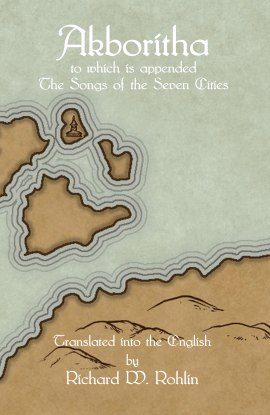
The Hardcover version of Akboritha is now sold out.
Copies of the Softcover version remain available.
The Hardcover version of Akboritha is now sold out.
Copies of the Softcover version remain available.
Purchase Richard W. Rohlin’s Akbortha.
NOTE: One copy per customer. This edition available for purchase and shipping in the United States only.
Richard W. Rohlin’s Akboritha will be available for purchase on August 1st at 2:00 pm MST.
An Interview with Richard Rohlin
NEW POETRY
Step Outside by Joshua Alan Sturgill
The Pilgrimage, Book II: Part 3 by Phillip Neal Tippin
Jesse Keith Butler has published a sonnet entitled The Lonesome Blues in the Orchards Poetry Journal. Congratulations!
Bunyan’s Book: Bunyan tells us by his method that there never was an individual named Christian who left a material city and fell into an actual swamp or slough; and we have every reason to doubt whether a Spaniard who called himself Don Quixote ever lived in a village of La Manche. But all these stories are true—because under a particular symbolism they give us a faithful image of our own souls and their adventures. …
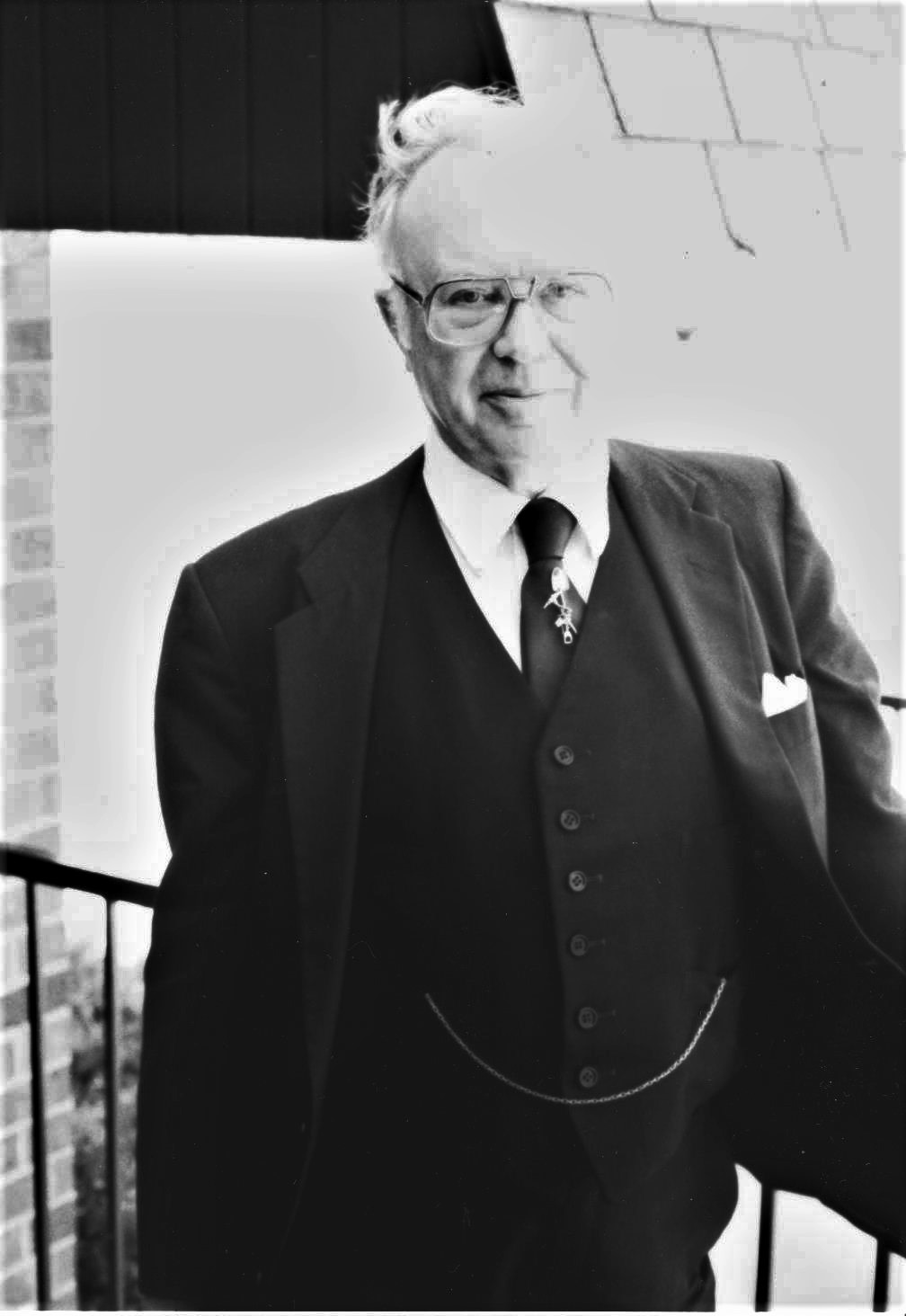
Recently, Richard W. Rohlin, the author of Akboritha, was kind enough to answer a few questions. To watch the interview with transcription, visit its dedicated page.
Richard W. Rohlin has published a video introduction to his upcoming book, Akborita, to which is appended The Songs of the Seven Cities. The book will be published in a limited edition by Darkly Bright Press in early August.

FEATURE
Russell Kirk: Inkling Without the Inklings by Dale Nelson
This week we are pleased to present an article on the Conservative theorist and ghost story writer Russell Kirk. In 1985, Dale Nelson met and interviewed Kirk. During the conversation, the author discussed his purpose in writing speculative literature: “My uncanny tales are intended to wake the moral imagination.”
NEW POETRY
Prima Causa by Joshua Alan Sturgill
The Pilgrimage, Book II: Part 2 by Phillip Neal Tippin
The “Language” of the Dance: And the music swelled and grew and died with strange cadences; and I felt, as I say, that here something of the ancient world had been recovered, that one could understand the secret significance of such worlds as nymph and faun, of all the wonderful fairy-tales in which the old peoples told the truth.
NEW POETRY
From December 2020 to September 2021, Darkly Bright Press serialized The Pilgrimage, a long-form poetry project by Phillip Neal Tippin. This week, we happily announce the commencement of Book II.
The Trees by Joshua Alan Sturgill
The Apologia of Princess: It is impossible, of course, to form a judgement on the story that follows. The Princess’s tale is none too clear; she talks of enemies in high places, of spies, of malignant and concocted scandals, of curtains moving gently in her apartment, of shadowy forms slinking away from her boudoir door. It seems clear that the Tuscan princess was “free and easy,” and the Court of Dresden was the reverse of free and easy. The reigning family, according to the author, is dévote: she, as we have seen, does not like many rosaries in a house. …
I Have No Island by Joshua Alan Sturgill
The Real King Edward: And there can be no doubt that there has been a very wide impression that King Edward was his own foreign secretary, that in his hands were all the delicate wires which controlled the movements of European international politics. The Germans, indeed, were convinced that King Edward was their deadly foe, a supreme and malefic enchanter who was slowly building up against them a wall of hostile nations and threatening armaments of war. …
Vin Nouveau by Joshua Alan Sturgill
“Are you fond of Keats?” said the enthusiastic young lady to her partner at the dance.
The young gentleman gave a glance of nervous perplexity and asked, in stammering tones:
‘‘I beg your pardon, but—er—er—what are Keats?”
Kew Gardens: Photo by David Iliff
NEW POETRY
Always to the Clouds by Joshua Alan Sturgill
GHOSTLY FICTION
At Chrighton Abbey by Mary Elizabeth Braddon. Death in some form or other—on too many occasions a violent death—had come between the heir and his inheritance. And when I pondered on the dark pages in the story of the house, I used to wonder whether my cousin Fanny was ever troubled by morbid forebodings about her only and fondly loved son. Was there a ghost at Chrighton—that spectral visitant without which the state and splendour of a grand old house seem scarcely complete? …
A Leap into Midsummer: This week, we offer a forgotten news article by Machen and a delightful essay on the Little People.