
It keeps getting better…
The upcoming Inklings Festival, held by Eighth Day Institute, will feature two keynote speakers.
Richard Rohlin is a software developer, Germanic philologist, and Orthodox Christian living in Texas with his wife and children. His published works on Germanic poetry, the Inklings, and the Sacramental Imagination include The Digital Hervararkviða and a chapter in the recent anthology Amid Weeping There is Joy: Orthodox Perspectives on Tolkien’s Fantastic Realm. He is the co-host of the Amon Sul Podcast from Ancient Faith Radio, which examines the works of J.R.R. Tolkien from an Orthodox Christian perspective. He is also a regular contributor to The Symbolic World YouTube channel and blog, where he discusses and writes about medieval universal history and hagiography. Richard’s latest project, Finding the Golden Key: Essays Towards a Recovery of the Sacramental Imagination, is being published in collaboration with Eighth Day Press and is still accepting abstracts through December 31, 2021: www.findingthegoldenkey.com.
Abstracts for the four main lectures are now available below:
Richard Rohlin
To the Chapel of the Grail:
Arthur Machen and Celtic Sacramental Imagination
Arthur Machen and other scholars of his time intuited that the Grail Legend contained within it a memory of a lost Celtic liturgy, one of both older apostolic origin and of a more authentically British character than the Tridentine Mass. In Machen’s work, and in particular in his short story “Levavi Oculos,” he uses the Grail Legend as a means of navigating difficult questions of the relationship between place and sacrament, and the authenticity of imported spiritual traditions. Tracing the origins of the Grail Legend from its diverse Celtic, Iberian, and Levantine origins, I will suggest that the Machen successfully resolves the question of “what has Wales to do with Jerusalem” in the persons and relics of the saints.
A Single Sacred Wafer:
Chrétien’s Mystagogical Grail
Their focus on the “Celtic” nature of the Grail Legend caused Machen, Waite, and others to largely reject the portrayal of the Grail legend found in continental sources beginning with Chrétien de Troyes. In this lecture, I will suggest that Machen et. al. were correct in their intuition about a liturgical origin for the Grail Legend, but that Chrétien was also aware of it, and in fact incorporated the shape of an ancient Christian liturgy into the structure of his Perceval ou le Conte du Graal.
Christopher Tompkins
Dreamt in Fire:
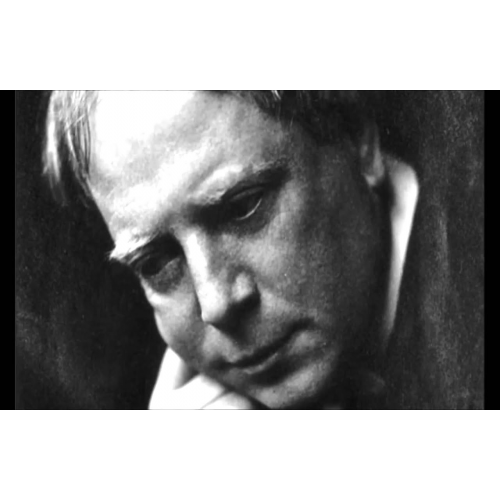
The Dreadful Ecstasy of Arthur Machen
The classic works of C. S. Lewis and J. R. R. Tolkien offer modern readers a fantastic redoubt for traditional values, first principals and sacramental reality in an age of ever-increasing madness. Alongside these titans, the intrepid reader can discover lesser-known, but resonant voices speaking in unison. A lonely pathfinder, Arthur Machen articulated an iconically-rich theory concerning the sacramental imperative of literature to function as a source of ecstasy for man. Far from being simply an abstract set of notions, Machen realized his ideas on hieroglyphics throughout a long career of writing fiction which shifted between noetic horror and the transfiguring glory of holy fear. Haunting, poetic, and sometimes confounding, each tale is a confrontation with the unseen, a lifting of the veil which serves to reorient man’s understanding of the cosmos from the merely material to the profoundly spiritual. By an examination of his life and work, “Dreamt in Fire” will endeavor to introduce new readers to a singular perichoretic vision as found in the dreadful ecstasy of Arthur Machen.
Of Sacraments and Ghosts:
A Few Comments on Christianity and the Horror Genre
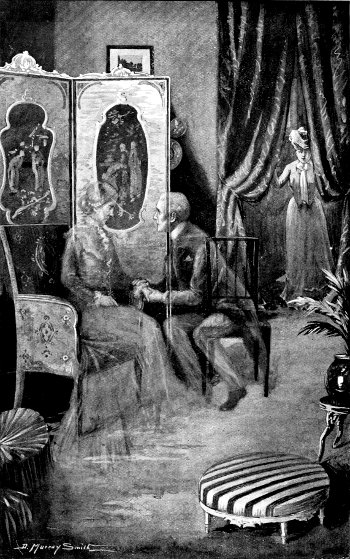
Is there any utility in the horror genre for the Christian? Setting aside the gory and nihilistic examples of the current day, this talk will highlight the unexamined aspects of an often misunderstood and misused mode of storytelling. Excellent horror begins where the believer begins: we are transcendent. It must present an ontological crisis for the characters, and to a lesser extent, the reader. The lecture will then examine the use of traditional folkloric entities in role of counterfeits, or Antichrists, before exploring the work of Christian horror writers of note. This latter topic includes the formidable ghost story tradition as practiced by M. R. James. Furthermore, the themes of “priest as hero,” and the use of the Sacraments as a force against darkness, excellently articulated by Ralph Adams Cram and the brothers A. C. & R. H. Benson, will also be studied. Horror is closer than we think—it can be glimpsed or felt in the unsafe worlds of fairy tales, Middle Earth and even Narnia. Beyond merely serving as a warning to the curious, these aspects and tropes of the genre may assist us in navigating a world greater than the sum of our physical senses.
The dates for the events are October 22-24, 2021. The complete schedule and registration will soon be available at the Eighth Day Institute website.


 This week, we’ve added THREE classic stories.
 Telegonos: A Tragedy in Verse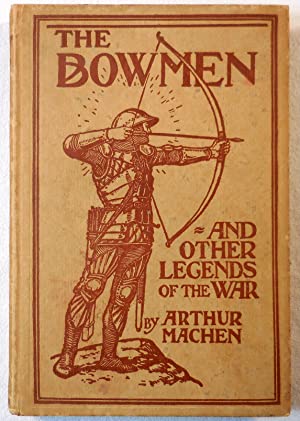
 darklybrightpress.com